
If you own a home in Halifax and have been watching energy prices climb, you have probably asked yourself the same question hundreds of other Calderdale residents are asking this year: are solar panels actually worth it in 2026? The short answer is that for most Halifax properties, solar panels deliver annual savings of £800 to £1,500, with a typical payback window of seven to ten years and a panel lifespan exceeding two and a half decades. But the real picture is more nuanced. Your roof orientation, your household consumption patterns, whether you add battery storage, and even which valley your street sits in all shape the final numbers. This guide covers the true cost of solar panel installation Halifax homeowners face, the savings you can realistically expect, and the local factors that make solar panels West Yorkshire a different proposition from the national average.
Table of Contents
- Why Halifax Homes Are Well-Suited to Solar Panels
- What Does Solar Panel Installation Cost in Halifax in 2026?
- Realistic Annual Savings for Halifax Homeowners
- Payback Periods and Long-Term Financial Returns
- Halifax-Specific Considerations: Housing, Planning, and Topography
- Battery Storage: Is It Worth Adding in Halifax?
- Why Choose Zengen for Solar Panel Installation in Halifax?
- Frequently Asked Questions About Solar Panels in Halifax
- Your Next Steps
Why Halifax Homes Are Well-Suited to Solar Panels
Halifax sits in a part of West Yorkshire that receives between 1,350 and 1,400 sunshine hours annually, with solar irradiance of roughly 1,100 to 1,200 kWh per square metre. Those figures hold up well against much of the UK and are more than adequate for strong panel performance. A standard 4.85 kWp installation in the region typically generates 4,000 to 5,000 kWh each year, which covers the annual electricity consumption of a typical three-bedroom household.

The town's steep valley topography creates some unexpected advantages. Many hillside properties face due south with unobstructed exposure across the Calder Valley, often outperforming flatter suburban roofs found elsewhere in Yorkshire. The local housing stock also lends itself to solar. Stone-built Pennine terraces, Victorian villas, and the distinctive weavers' cottages that define Halifax's architectural character frequently feature large, unshaded roof planes that can accommodate substantial panel arrays. With nearly 1.7 million UK homes now fitted with solar installations, Halifax's housing density and ownership patterns align well with the typical installation profile, making home solar panels Yorkshire a practical proposition for a wide range of property types.
What Does Solar Panel Installation Cost in Halifax in 2026?
Typical System Sizes and Price Ranges
The cost of solar panels Halifax residents pay depends on system size, roof complexity, and whether you include battery storage. For a typical 4 kW to 6 kW system, you can expect to pay between £6,000 and £10,000 at the current 0% VAT rate. The UK national average for a 4.5 kWp system sits around £7,600, though Checkatrade's aggregated installer data places the Halifax average slightly higher at £9,253, with prices ranging from £6,944 to £12,278 depending on installation complexity and equipment quality.
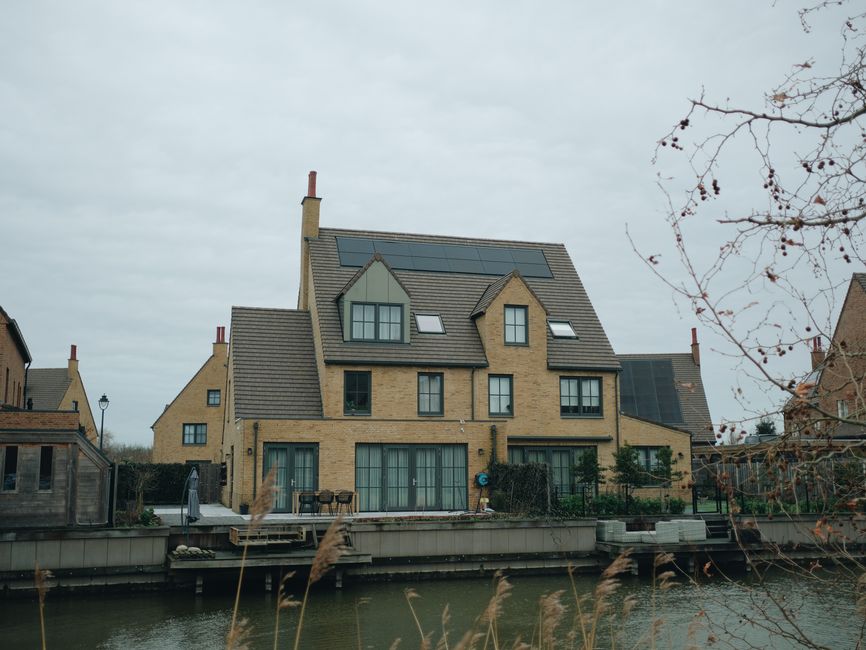
If you are considering a combined solar and battery package, a 4.95 kWp system with storage averages £12,406 across Yorkshire. The battery component alone typically costs around £5,292, which explains the jump from a panel-only installation. Some entry-level packages marketed through banking partnerships start from approximately £5,650, though these generally cover smaller systems with correspondingly lower output and savings.
What's Included in the Price
A properly quoted installation price should cover MCS-certified panels and inverters, all roof mounting hardware, and the full installation labour. It should also include scaffolding, electrical connections, and any necessary consumer unit upgrades. Reputable solar installers Halifax homeowners engage will handle Smart Export Guarantee registration and provide all certification paperwork as part of the package. The 0% VAT rate on qualifying solar PV and battery installations remains confirmed until at least 31 March 2027, meaning any installation completed during 2026 qualifies for the saving. For larger systems, your installer should also manage G99 applications to Northern Powergrid, the local distribution network operator, without additional hassle on your part.
Realistic Annual Savings for Halifax Homeowners
Energy Bill Savings
Most Halifax homes save between £800 and £1,500 per year on electricity bills, with the exact figure determined by system size, roof orientation, and how much energy the household consumes during daylight hours. A typical 4 kW system generating 3,200 to 3,800 kWh annually will deliver savings toward the lower end of that range, while larger 5 kW to 6 kW systems push closer to the upper figure. These estimates are based on energy price cap assumptions for 2026, with unit rates around 24.67p per kilowatt-hour. If energy prices rise further, your savings increase accordingly. More conservative estimates from banking-sector analyses put annual savings at £500 to £700, though these reflect smaller entry-level systems rather than the mid-range installations most Halifax homes require.
Smart Export Guarantee (SEG) Income
Beyond reducing your bills, you can earn additional income by exporting unused electricity to the grid under the Smart Export Guarantee scheme. Typical export payments range from £100 to £200 per year, depending on the tariff rate your energy supplier offers and your system's total output. SEG rates vary between suppliers, and a good installer will advise you on the best available tariff at the time of installation. The economics shift considerably when you add battery storage. Without a battery, households typically self-consume only 30 to 50 percent of the electricity they generate, exporting the rest. With a battery, self-consumption rises to between 70 and 90 percent, meaning far less electricity is exported at relatively low SEG rates and far more is used to offset peak-price grid imports during evenings.
Total Annual Value
When you combine bill savings and SEG income, a typical Halifax home can expect total annual value of £900 to £1,700. At the mid-range of system costs, between £8,000 and £10,000, this translates to a payback period of seven to ten years. Given that panels last 25 years or more, most homeowners enjoy 15 to 18 years of net-positive returns after reaching breakeven, making the long-term financial case compelling for anyone planning to stay in their property.
Payback Periods and Long-Term Financial Returns
Calculating payback accurately requires accounting for system cost, annual savings, SEG income, and the 0% VAT benefit currently available. A £9,000 system saving £1,100 per year pays for itself in roughly 8.2 years, comfortably within the seven-to-ten-year range that local installers cite. Adding battery storage extends the upfront cost but can accelerate payback for households with high evening electricity usage by maximising self-consumption of generated power.
There is also a secondary return to consider. Solar panels can increase property value by up to 14 percent, according to analysis cited by MoneySavingExpert, which may offset a significant portion of the initial investment if you sell. Over the long term, panel degradation is modest: most panels still operate at around 90 percent efficiency after 25 years, so savings remain substantial even if they decline slightly over time. One cost worth factoring into lifetime calculations is inverter replacement. Inverters typically need replacing every 10 to 15 years at a cost of £800 to £1,500, and a prudent homeowner budgets for this mid-life expense.
Halifax-Specific Considerations: Housing, Planning, and Topography
Local Housing Stock and Roof Suitability
Halifax's architectural heritage presents both opportunities and challenges for solar panel installation. Stone-built terraces and weavers' cottages often have solid stone roofs that require specialist mounting techniques, and a competent local installer will assess this thoroughly during the initial survey. Victorian villas, by contrast, frequently offer large, unshaded south-facing roof planes that are ideal for solar arrays. Roof orientation matters considerably: east or west-facing roofs generate 15 to 20 percent less energy than south-facing ones, and this should be factored into any savings projections you receive. Conservation areas, including parts of the Piece Hall surroundings, Dean Clough, and Shibden, may require planning permission, whereas outside these zones roof-mounted solar is generally permitted development.
Calderdale Council and Planning Permission
For the majority of Halifax homes, planning permission is not required for roof-mounted solar panels. The rules tighten for listed buildings and properties within designated conservation areas, where you should check with Calderdale Council before proceeding. A reputable installer will handle planning enquiries where needed and advise on compliance from the outset. Northern Powergrid is the local distribution network operator, and larger systems may need G99 connection approval, a technical step your installer should manage as part of the installation process.
Battery Storage: Is It Worth Adding in Halifax?
Battery storage transforms how you use solar energy, increasing self-consumption from 30 to 50 percent up to 70 to 90 percent. This means you can store excess daytime generation and use it during evenings when grid electricity is at its most expensive. The trade-off is cost. Batteries average £5,292 in Halifax, adding significantly to the upfront investment and typically extending the payback period by two to four years. For high-usage households consuming 3,500 kWh or more annually, the long-term returns often justify the additional outlay.
Halifax's climate shapes the battery equation. Shorter winter days mean batteries deliver most value during spring and summer; winter generation is limited regardless of storage capacity. A solar-plus-battery package in Yorkshire averages £12,406, and for households with above-average consumption, this configuration frequently delivers the best lifetime value. As energy prices continue rising and time-of-use tariffs become standard, the flexibility that battery storage provides grows increasingly valuable, making it a sensible future-proofing measure even if the immediate payback looks longer.
Why Choose Zengen for Solar Panel Installation in Halifax?
Zengen provides MCS-certified solar panel installation Halifax homeowners can rely on, with full compliance across all UK standards and regulations. The team understands West Yorkshire housing stock in detail: stone roofs, Victorian properties, and the unique topography of Halifax's valleys are all factored into every survey and system design. Pricing is transparent, with clear quotes that include scaffolding, electrical work, and certification, so there are no surprises on installation day. Zengen offers a complete end-to-end service covering the free initial survey, custom system design, professional installation, MCS certification, and Smart Export Guarantee registration. After installation, ongoing support includes maintenance guidance, inverter replacement advice, and system monitoring recommendations to help you maximise returns over the full lifespan of your panels.
Frequently Asked Questions About Solar Panels in Halifax
Are solar panels worth it in Halifax in 2026?
Yes, for most homes. Annual savings of £800 to £1,500, a payback period of seven to ten years, and a panel lifespan exceeding 25 years make the financial case strong for the majority of Halifax property types.
How many panels do I need for a 3-bedroom house in Halifax?
A typical three-bedroom semi-detached house using around 3,500 kWh per year requires a 4 kW system, which translates to approximately eight to ten panels depending on panel wattage.
Do I need planning permission for solar panels in Calderdale?
Generally no. Permitted development rights apply outside conservation areas. Listed buildings and properties in designated conservation areas, including parts of Shibden and the Piece Hall surroundings, require consent from Calderdale Council.
How long do solar panels last?
Panels last 25 years or more with minimal degradation. Inverters typically need replacement every 10 to 15 years at a cost of £800 to £1,500.
What is the Smart Export Guarantee?
A government-backed scheme that pays households for exporting unused solar electricity to the grid. Typical income ranges from £100 to £200 per year depending on your supplier's tariff rate and your system's export volume.
Your Next Steps
Solar panels in Halifax offer strong financial returns for most homeowners, with annual savings of £800 to £1,500 and payback within seven to ten years. The current 0% VAT rate remains in force until at least March 2027, and with energy prices elevated, 2026 is an opportune time to invest. Book a free survey with Zengen to receive a tailored assessment of your roof's suitability, accurate costings, and projected savings for your specific property. Acting before the VAT rules change secures the 0% rate and maximises your return on investment for decades to come.

ZenGen Ltd, serving residential, commercial, and light industrial clients across West and North Yorkshire. With highly qualified engineers and experienced surveyors, we offer expert, honest guidance - no high-pressure sales. Committed to sustainability, we provide solar panel installations, EV charging solutions, and commercial electrical services, ensuring top-quality, reliable solutions for a low-carbon future.
Quick Links
AftercarePast ProjectsFAQ's Warranty InformationPrivacy PolicyResource Downloads
Tel: 01422 416860
Email: info@zengen.co.uk
Office: White Rose Mills, Holdsworth Rd,
Halifax, HX3 6SN
Suppliers





© Copyright 2026 | ZenGen Ltd. Company Registration 15741296 | All Rights Reserved